
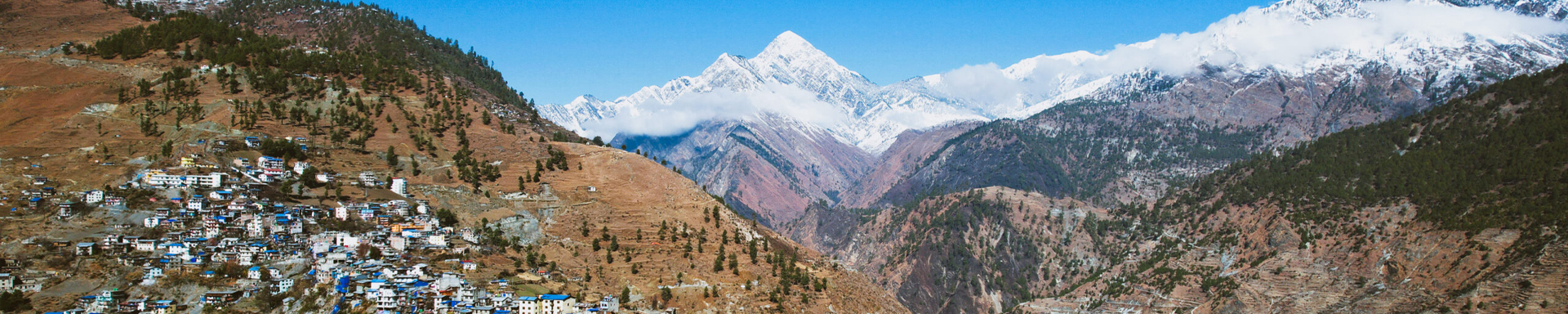
Young Nepalis share one common aspiration: to leave the country in search of a better future. Every day, around 2,000 Nepali youth leave the country for employment. It is an obligation for most and a sad consequence of unemployment, poverty and lack of opportunity.
UMN has been providing practical training programmes in various fields to increase skills and entrepreneurship in local communities. This way, we encourage migrant returnees to make a fresh start at home once again while giving hope to the younger generation for a future in Nepal.
Read the story of Khem Bahadur, a migrant returnee.
“I had no choice but to leave my family for seasonal migration to do labour work in India,” Khem Bahadur, a 32-year-old from Doti, recalls. For years, limited employment opportunities forced him to migrate to India, leaving his family behind. Life there was harder than he expected, and despite long hours of physical labour, his earnings were not enough to support his children’s education.
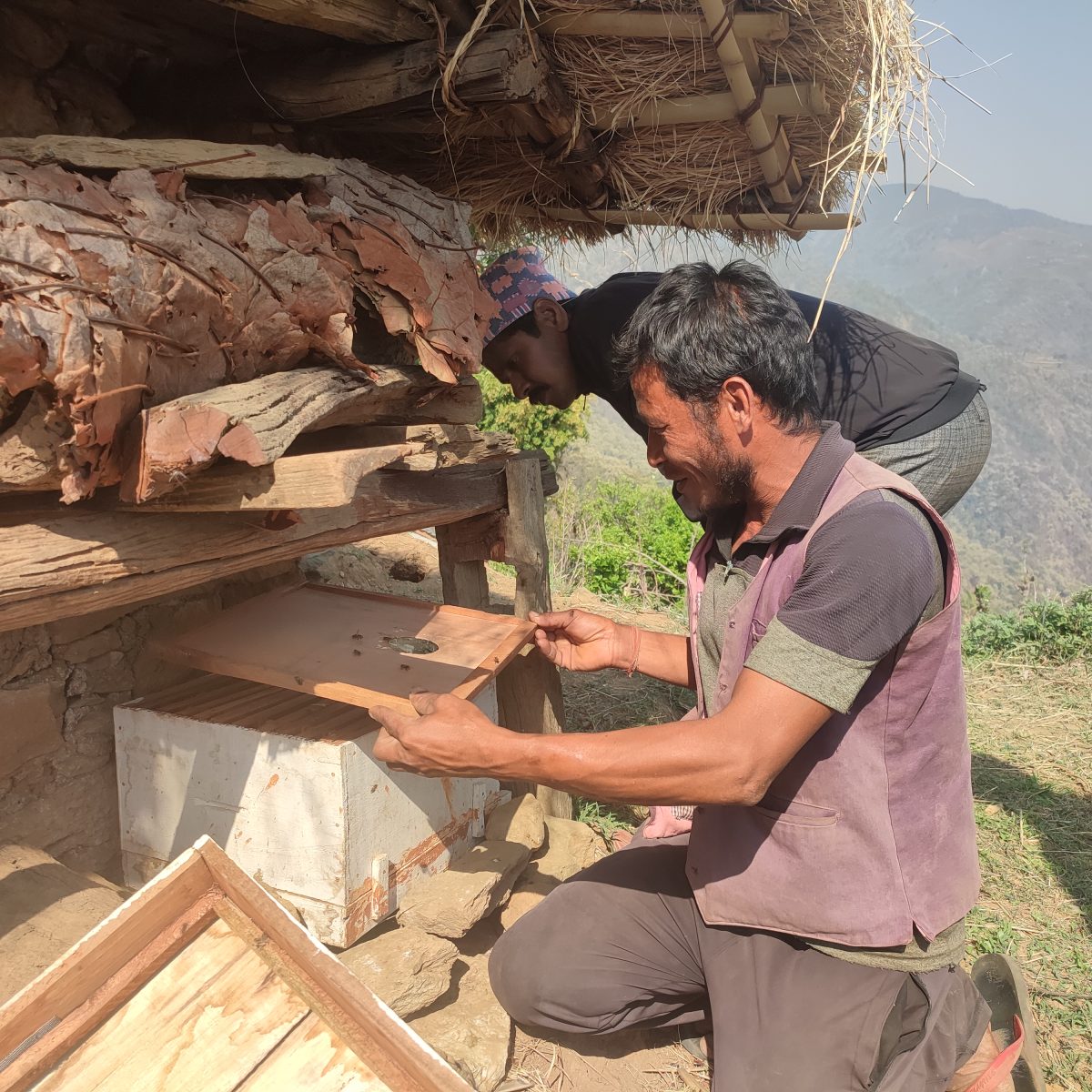
Although beekeeping had been part of his family’s tradition, it was only practiced for household consumption using traditional beehives. “We never imagined that honey could support a family,” Khem Bahadur says.
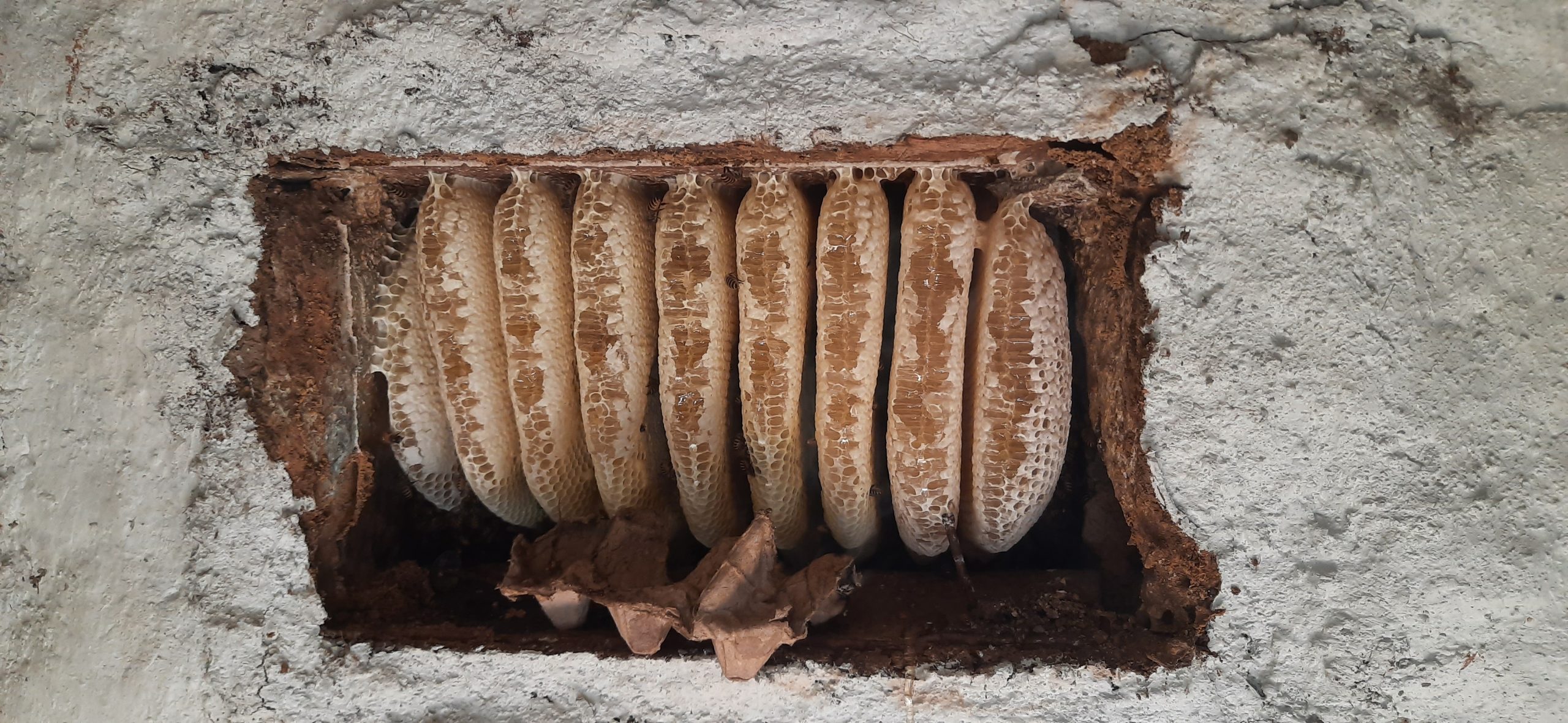
The turning point came in 2023, when Khem Bahadur returned from India and had the chance to participate in a five-day beekeeping training with UMN’s support. The training introduced him to modern, climate-resilient, and environmentally friendly beekeeping practices. With UMN’s support, he also received three modern beehives and technical assistance.
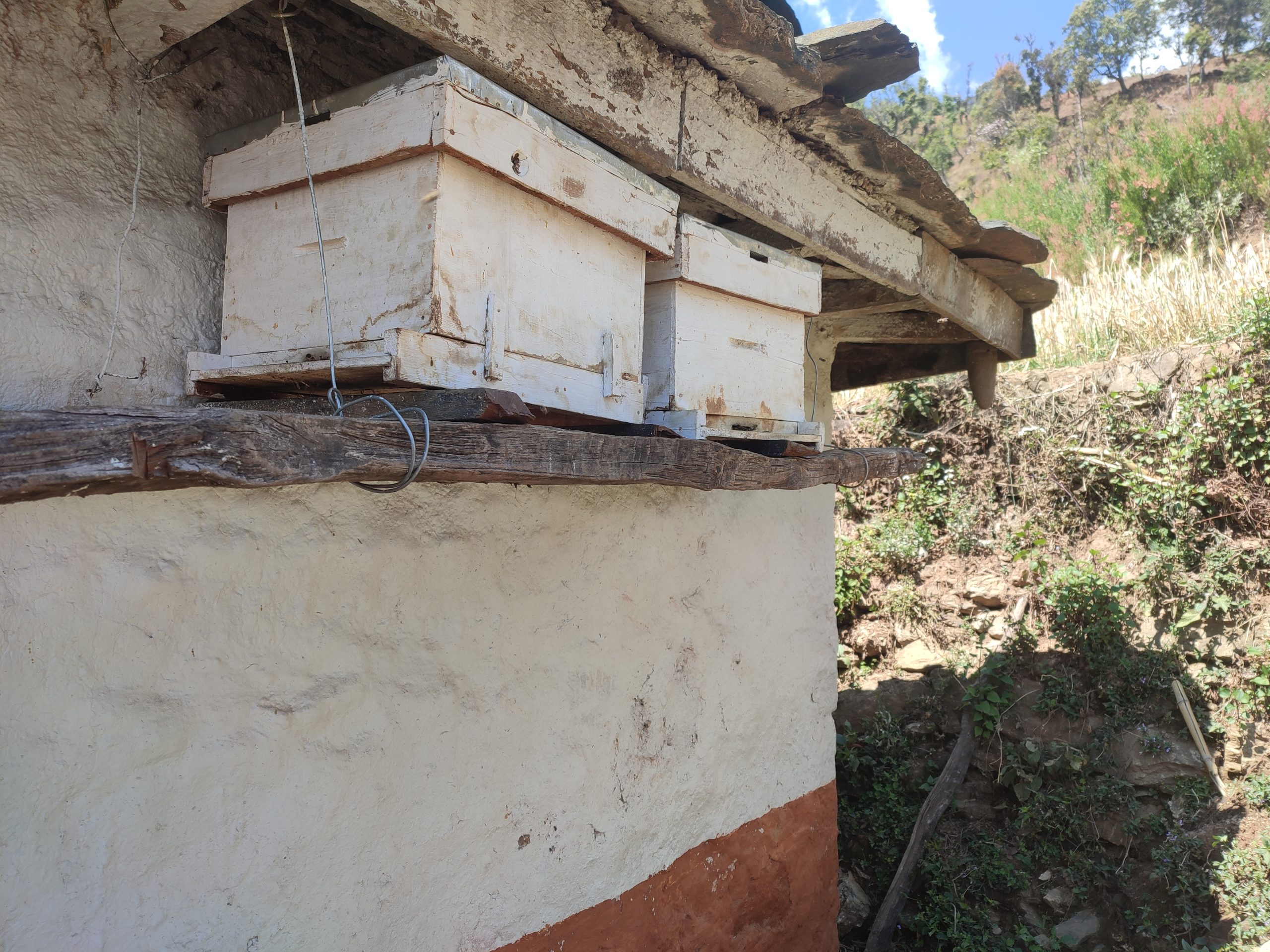
With renewed confidence, he started his enterprise with three modern beehives provided by UMN and four traditional beehives of his own. With continuous technical guidance and his own dedication, he gradually expanded his business to 46 beehives within three years. Initially, he sold honey in nearby markets. As people experienced the quality of his product, word spread quickly. “People started calling me directly to order honey,” he says with a smile. “Sometimes I don’t even have enough to meet the demand.”
This year alone, Khem Bahadur harvested around 350 kilograms of honey, earning approximately NPR 300,000 (approx. USD 2,040), which is even higher than what he used to earn in India. This income has transformed his life. He can now cover household expenses, support his children’s education, and save for the future. “Earning at home gives me dignity, as I no longer need to do labour work in India. Most importantly, I no longer need to migrate to India for employment,” he added.
Khem Bahadur’s journey shows how access to skills, technical support, and local opportunities can help young people pursue a dignified livelihood and build a sustainable future in their own communities.